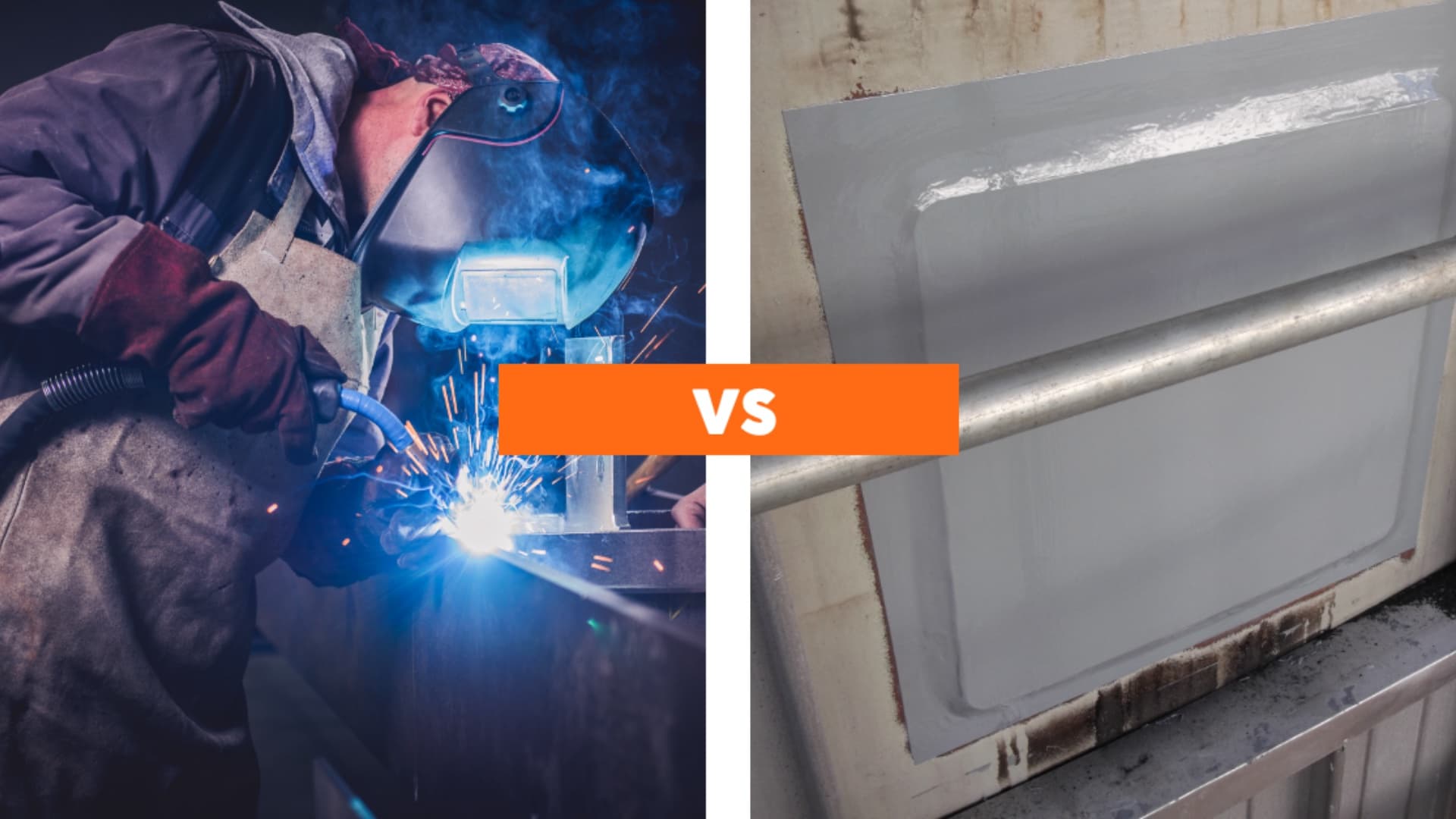
No Welding | No Hot Work Permits | No Coating Damage
Cold Bonding and Plate Bonding
Bond steel plates, brackets, and structural components to tanks, pipes, vessels, and ship decks without welding.
What Is Cold Bonding?
Cold bonding uses high-strength epoxy and structural adhesive compounds to permanently bond metal to metal without welding. Applications range from simple plate repairs to load-bearing structural bonds for ladders, brackets, and equipment mounting.
For tanks with interior coatings, cold bonding eliminates a critical problem: welding heat damages coatings on the opposite side. With cold bonding, interior coatings remain intact because there is no heat transfer through the metal.
Cold bonding is used across industries for pipe leak sealing before composite wrap, ship deck repairs, vessel structural work, equipment mounting, and anywhere hot work is prohibited or impractical.
Welding vs Cold Bonding
Traditional Welding
Hot work permits required
Fire watch, safety procedures, scheduling delays
Damages interior coatings
Heat transfers through metal, destroying linings
Tank must be emptied and ventilated
Extended downtime, lost production capacity
Certified welder required
Specialized labor, contractor scheduling
Creates heat-affected zone
Weakens surrounding metal, stress cracking risk
Belzona Cold Bonding
No hot work permits
Start immediately, no fire watch required
Interior coatings stay intact
No heat = no damage to linings or coatings
Apply while equipment is in service
Minimal downtime, exterior application
Applied by maintenance personnel
Simple application, we provide training
No heat-affected zone
Full metal strength preserved
Cold Bonding Products
Different applications require different products. Surface condition, load requirements, and service environment determine which Belzona system to use.
Super Metal
The standard for cold bonding. Maximum bond strength on clean, dry, blast-prepared metal surfaces.
Best for: General plate bonding, tank repairs, equipment mounting
Surface: Dry, abrasive blasted or ground
Super UW-Metal
Surface-tolerant formula that bonds to wet, oily, or minimally prepared surfaces. Originally developed for underwater repairs.
Best for: Pipe repairs, emergency work, damp conditions
Surface: Wet, oily, or hand-tool prepared
Repair Composite
High-build repair composite for piping and substrate rebuilding before composite wrap or coating application.
Best for: Pipe leak sealing, surface rebuilding before SuperWrap
Surface: Prepared metal, high-build capability
Structural Adhesive
Fatigue-resistant structural adhesive for load-bearing applications. Tensile shear strength over 33 MPa (4,800 psi).
Best for: Ladders, sprinklers, clips, structural brackets
Surface: Designed joints, load-bearing bonds
Not sure which product fits? Contact us with your application details — surface conditions, load requirements, and service environment. We will recommend the right system and provide application guidance.
Common Applications
Pipe Leak Sealing
Bond plates over leaks or seal substrates before SuperWrap composite repair
Ship Deck Repairs
Steel deck plate bonding and structural repairs on vessels
Tank Shell Reinforcement
Bond doubler plates over corroded tank walls to restore integrity
Ladders and Brackets
Structural bonding of ladders, handrails, and support brackets to vessels
Sprinkler Systems
Bond sprinkler mounting hardware to tank tops and structures
Load-Bearing Clips
Structural clips and supports where welding is not practical
SPECIALTY APPLICATION
Cell Tower Antenna Mounting
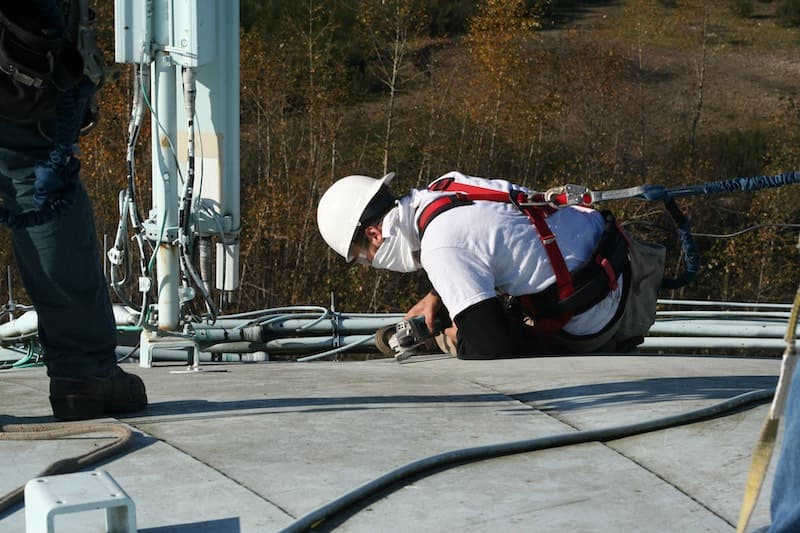
Telecommunications companies lease space on municipal water tanks to mount cell tower antennas. The mounting plates must be attached to the tank exterior — but welding would destroy the interior potable water coating.
Cold bonding is the solution. We have completed over 100 cell tower antenna mounting projects throughout the Pacific Northwest in the past five years. The bond is structural, the interior coating stays intact, and there is no hot work on a potable water system.
Why utilities choose cold bonding:
- No damage to interior potable water coatings
- No hot work permits on water infrastructure
- Tank stays in service during installation
- Structural bond meets antenna load requirements
Case Study
5G Antenna Plate Bonding — Potable Water Tank
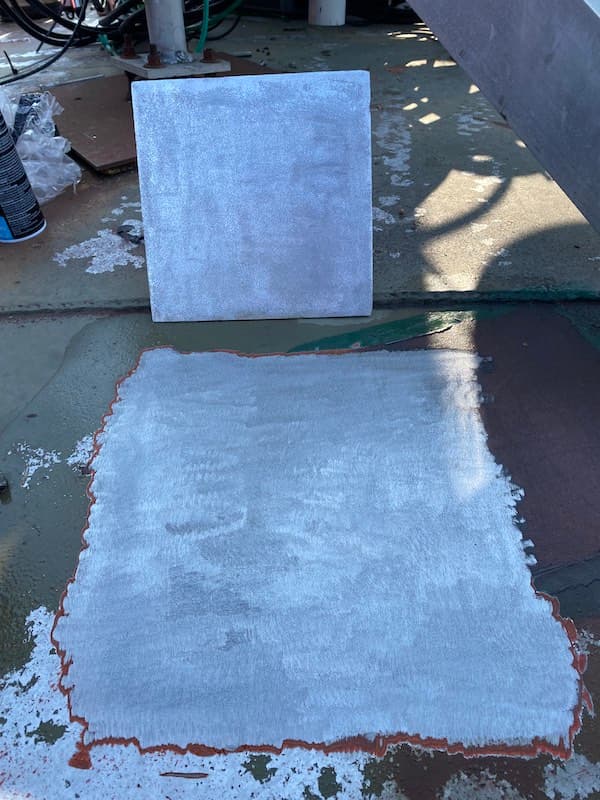
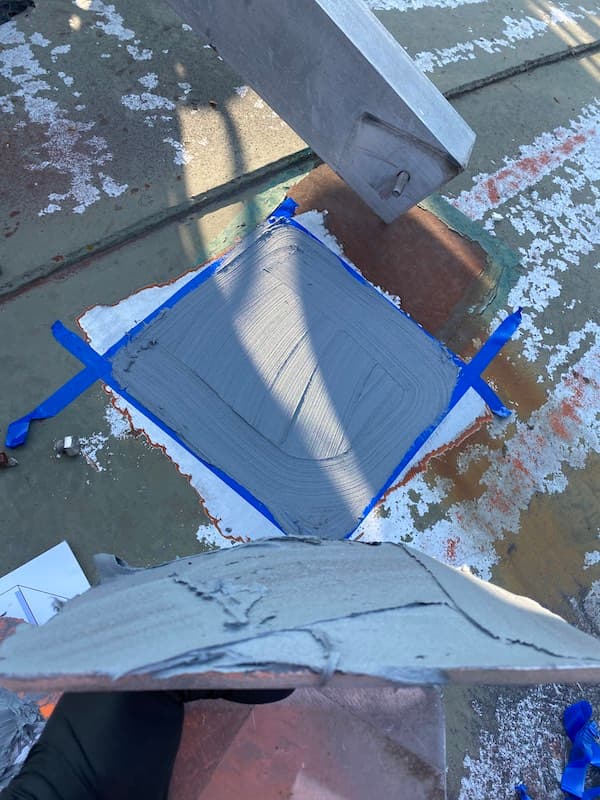
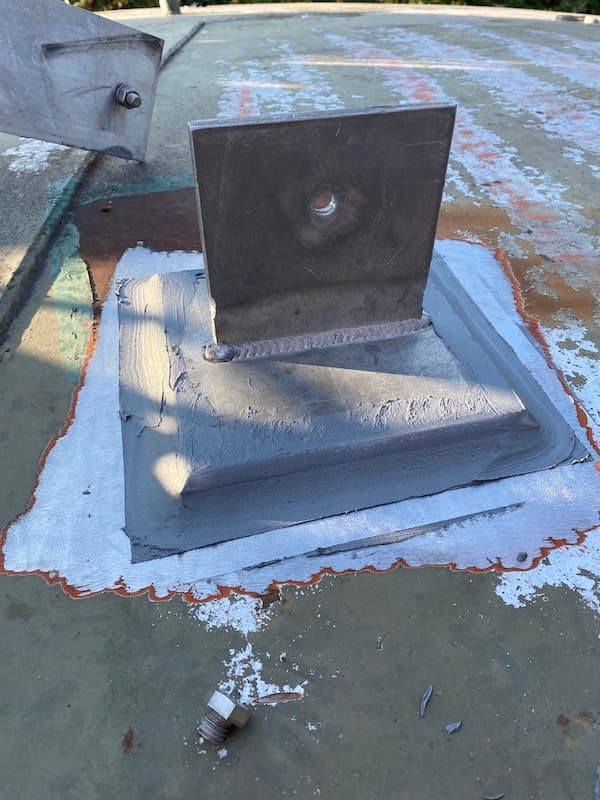
A national mobile carrier expanding its 5G network needed to mount new antenna arrays on top of a municipal potable water tank in the Pacific Northwest. The tank was lined with an epoxy coating system certified for drinking water contact — and that coating had to remain intact. Welding was not an option. A single burn-through would compromise the potable water lining, requiring the tank to be taken offline, drained, recoated, and recertified — a process that could take weeks and leave the community without water storage capacity.
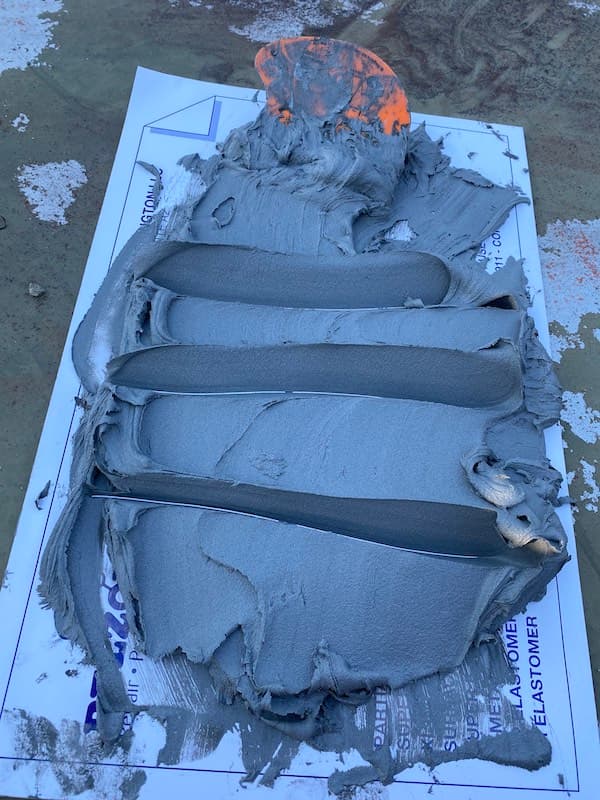
Belzona 1161 (Super UW-Metal) was selected as the surface-tolerant bonding adhesive for the antenna mounting plates. The product bonds reliably to hand-tool prepared surfaces and generates zero heat during application, ensuring the interior potable water coating remained completely undamaged. Belzona Technology Northwest provided a technical consultant on-site throughout the bonding operation to oversee surface preparation, mixing, and plate placement — a standard practice we recommend for every cold bonding project given the critical importance of getting the preparation, mix ratio, and application technique right the first time.
Industries Using Cold Bonding
Marine
Hull repairs, deck bonding, and structural work where hot work is prohibited.
Oil and Gas
Pipe repairs, tank bonding, and structural work in hazardous areas.
Water and Wastewater
Potable water tank repairs and antenna mounting without coating damage.
Pulp and Paper
Vessel repairs, pipe bonding, and equipment mounting in mill environments.
Frequently Asked Questions
How strong is a cold bond compared to welding?
Belzona 7311 structural adhesive delivers tensile shear strength over 33 MPa (4,800 psi) and is engineered for load-bearing applications. The bond distributes load across the entire surface rather than concentrating stress at weld points.
Can Belzona be applied to wet or oily surfaces?
Yes. Belzona 1161 is formulated to displace water and bond to damp, wet, or oily metal surfaces. It was originally developed for underwater repairs and provides reliable bonds when ideal surface preparation is not possible.
How long does the repair take?
Application is typically completed in a few hours. Full cure in 24 hours at 68F (20C), faster at higher temperatures. Most repairs can be completed in a single shift with no fire watch or hot work procedures.
Will interior tank coatings be damaged?
No. Cold bonding generates no heat, so interior coatings remain intact. This is why municipalities choose cold bonding for potable water tanks — especially for cell tower antenna mounting where interior coating integrity is critical.
Need Cold Bonding Support?
Describe your application and we will recommend the right Belzona system. Product training, surface preparation guidance, and technical support throughout Washington, Oregon, Alaska, and Northern Idaho.
Belzona Technology Northwest is the exclusive authorized Belzona distributor for Washington, Oregon, Alaska, and Northern Idaho. Cold bonding products, structural adhesives, and technical support for industrial facilities throughout the Pacific Northwest.